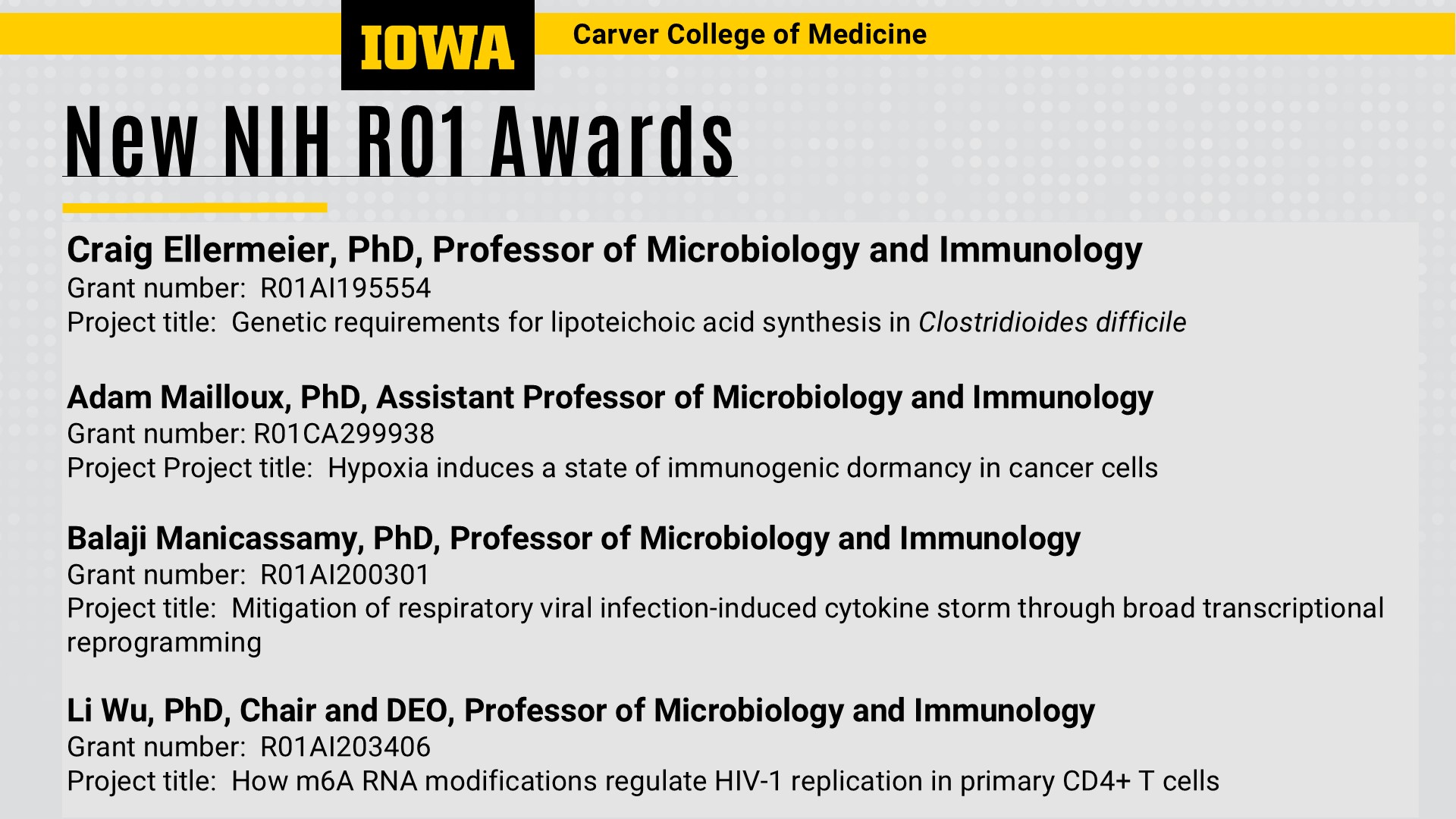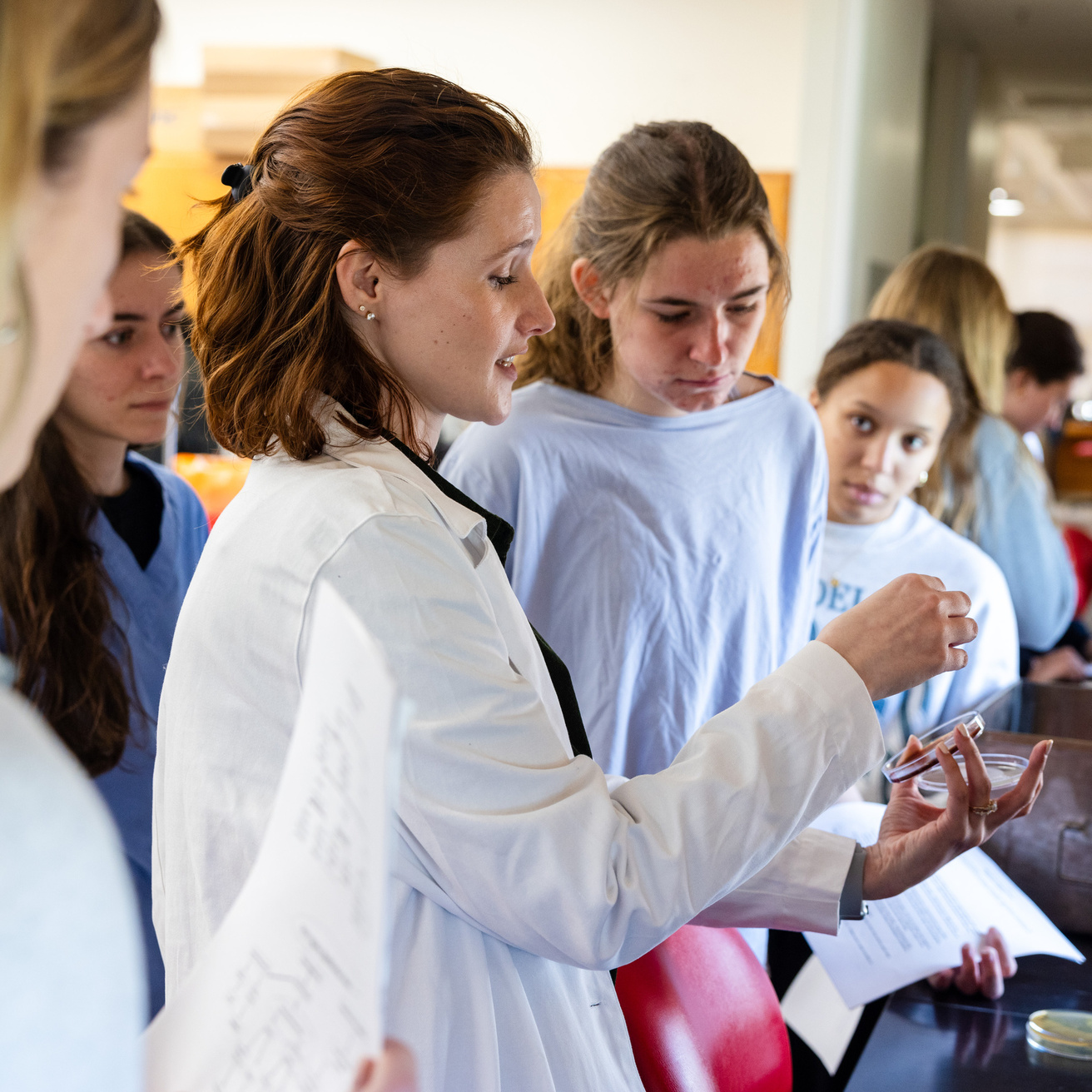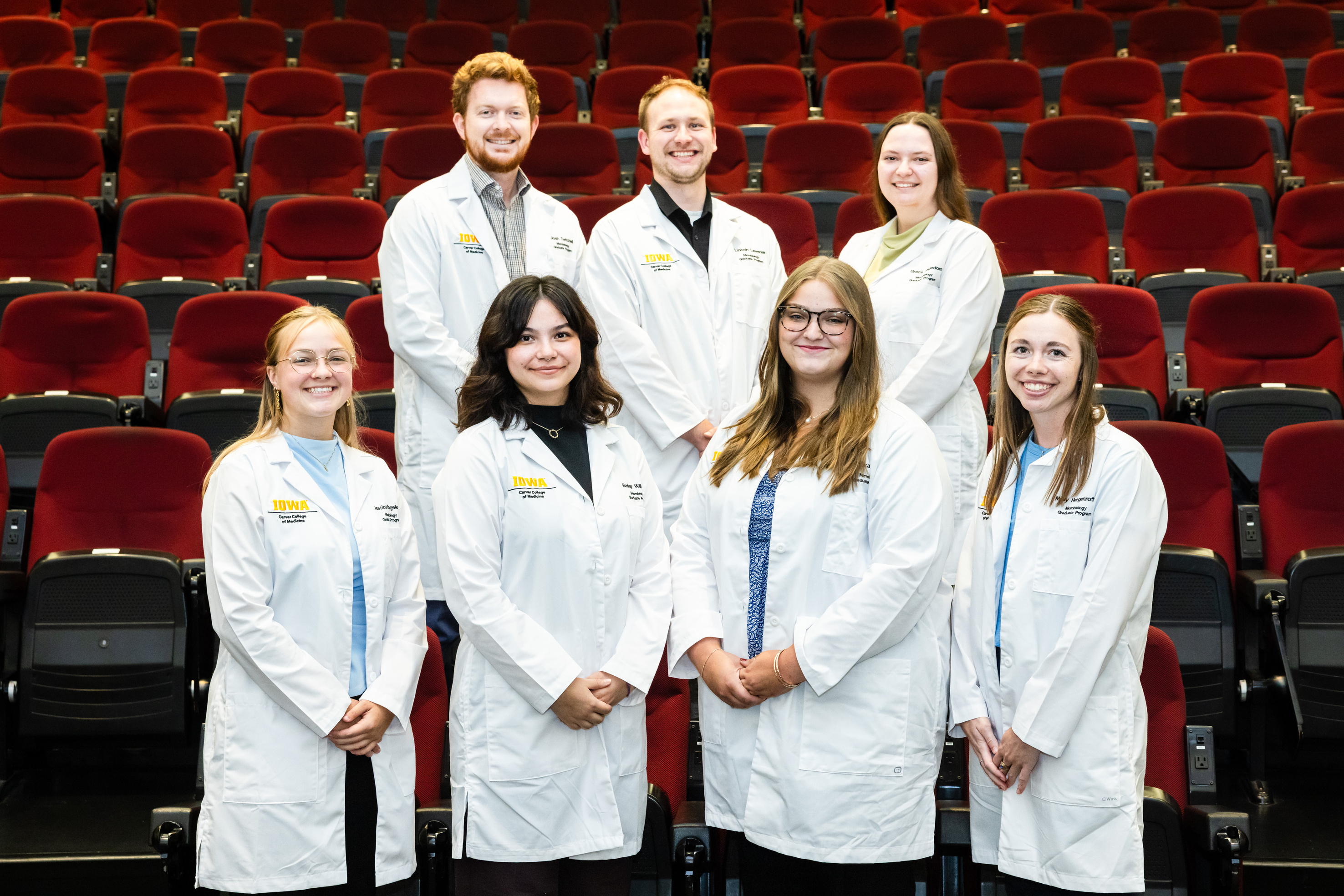
We strive to be a world-class hub for interdisciplinary education and research programs in microbial pathogenesis, infectious diseases, and immunology, aiming to enhance human health.
Publication Highlights
Reduction of TRAF3 by heterozygosity or aging impacts B cell function
- Published: January 14, 2026
- Proc Natl Acad Sci
- Corresponding Author: Jana Radin, PhD
- Read the full article →
Research Summary:
Antibiotic failure is a major clinical problem that cannot always be explained by traditional resistance mechanisms. This study reveals that the host immune protein calprotectin, which is abundant at infection sites, can interfere with β-lactam antibiotics by sequestering zinc and inactivating bacterial autolysins that mediate cell lysis. This finding uncovers a mechanism of antibiotic tolerance that arises from the host response itself, rather than from the pathogen. Understanding how immune factors like calprotectin alter antibiotic activity opens the door to host-targeted strategies that enhance treatment outcomes. These findings suggest that local zinc availability during infection could be a critical, and previously underappreciated, determinant of β-lactam efficacy.
Authors: Amanda Z. Velez, Jana N. Radin, Emily N. Kennedy, Joshua B. Parsons, Heather M. Tong, Emma Jung, Emily Alam, Lauren C. Radlinski, Nikki J. Wagner, Vance G. Fowler Jr., Sarah E. Rowe, Thomas Kehl-Fie, Brian P. Conlon
A versatile H5N1-VSV platform for safe influenza virus research applications
- Published: August 8, 2025
- Journal of Virology
- Authors: Boopathi Sownthirarajan, Maya Mason, Gayathri Loganathan, Senthamizharasi Manivasagam, Rohit K. Jangra, Gene S. Tan, Daniel R. Perez, Balaji Manicassamy
- Read the full article →
Research Summary:
The H5N1 strain of influenza A virus (IAV) continues to cause severe infections in a range of avian and mammalian species, including sporadic but concerning cases in humans. There is growing concern that circulating H5N1 strains could lead to widespread human outbreaks. Research with highly pathogenic H5N1 viruses is restricted to Biosafety Level 3 (BSL-3) laboratories. Vesicular stomatitis virus (VSV)-based vaccine vectors expressing heterologous viral proteins from Ebola, SARS-CoV-2, Lassa virus, etc., have previously been shown to be safe and effective in animal models and human clinical trials. Here, we report the development of a recombinant VSV expressing the hemagglutinin (HA) and neuraminidase (NA) genes of H5N1 IAV (H5N1-VSV), which serves as a versatile platform to study various aspects of H5N1 IAV biology.
Welcome to the Department
Welcoming Dr. Alex Kleinpeter to the Department
We’re happy to share that Dr. Alex Kleinpeter joined the Department of Microbiology and Immunology on May 30th. Please take a moment to give him a warm welcome!
Welcoming Dr. Amanda Dudek to the Department
We are excited to announce that Dr. Amanda Dudek will be joining the Department of Microbiology and Immunology on April 30th. We encourage everyone to extend a warm welcome to her upon her arrival.
Alex Kleinpeter, PhD
Assistant Professor of Microbiology and Immunology