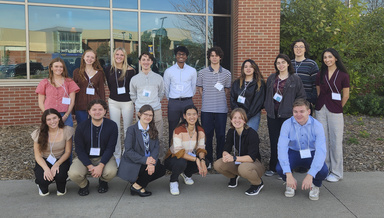
Sixteen students from the Microbiology Undergraduate Student Association (MUSA) represented the University of Iowa at the 86th Annual ASM North Central Branch Meeting, Showcasing the Power of Microbes, October 9-10 in Brookings, South Dakota. The meeting gave students the opportunity to present their research, connect with fellow microbiologists, and learn more about emerging research and career paths in the field.
Two University of Iowa students earned awards for their oral presentations:
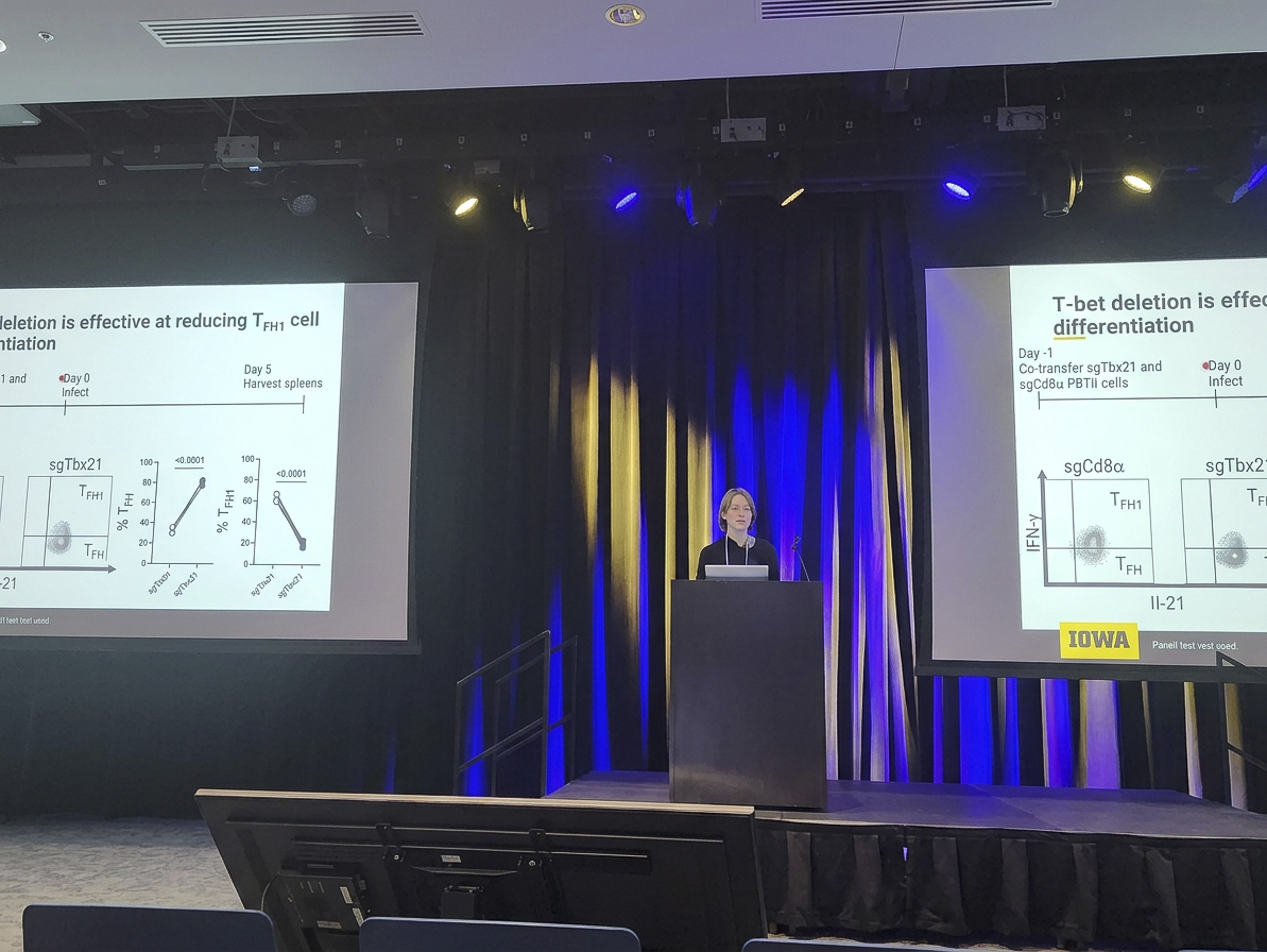
- Morgan Kremer (Butler Lab) received First Place in the Undergraduate Student Oral Presentation category for her presentation, “A Major CD4 Helper T Cell Subset Induced During Malaria Provides Suboptimal B Cell Help and Is Promoted by Adenosine Signaling.”
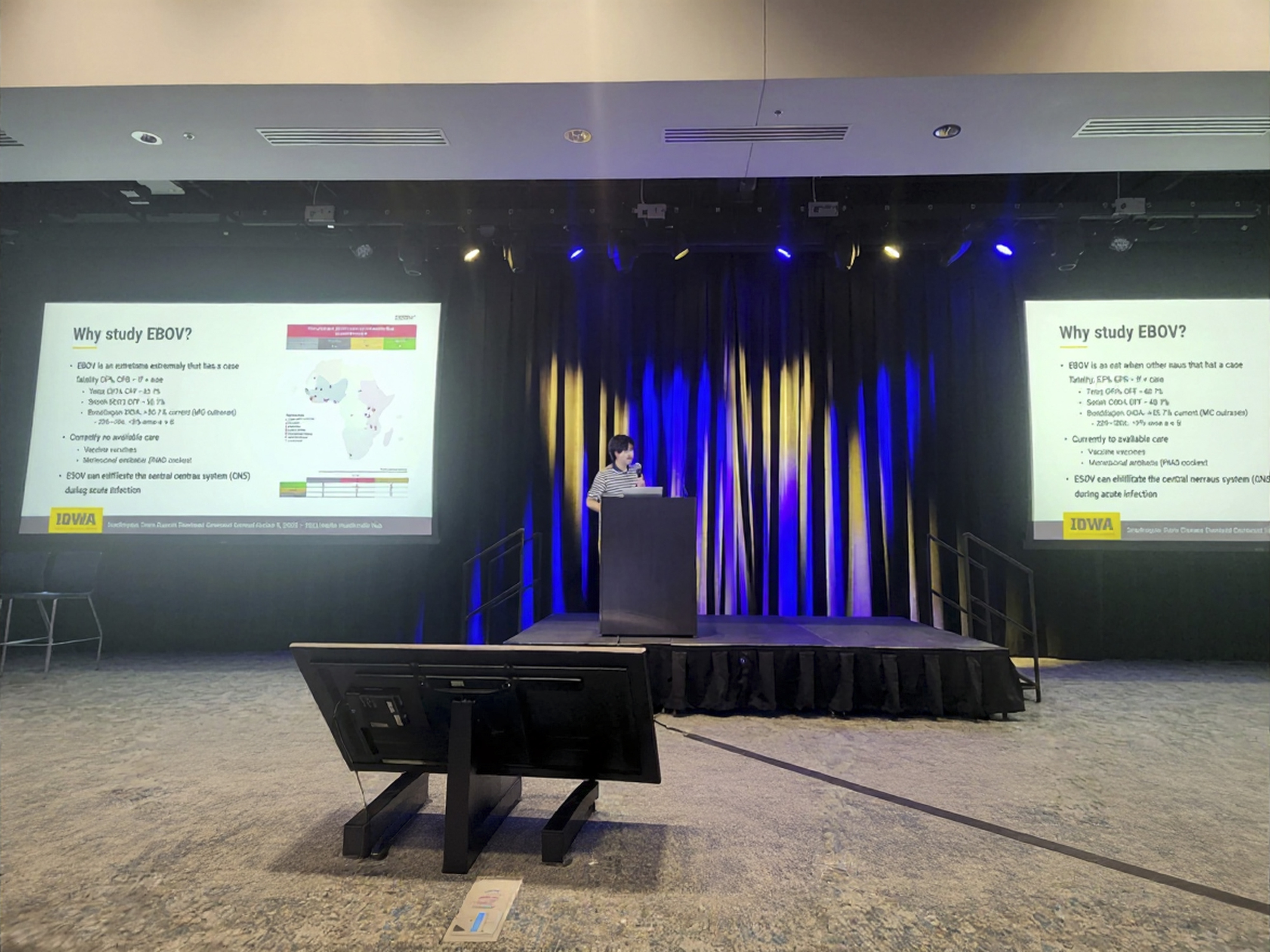
- Omar Aristizabal (Tan Lab) received Second Place in the Undergraduate Student Oral Presentation category for his presentation, “Characterizing Ebolavirus Localization and Neuroinflammation in the Murine Central Nervous System (CNS).”
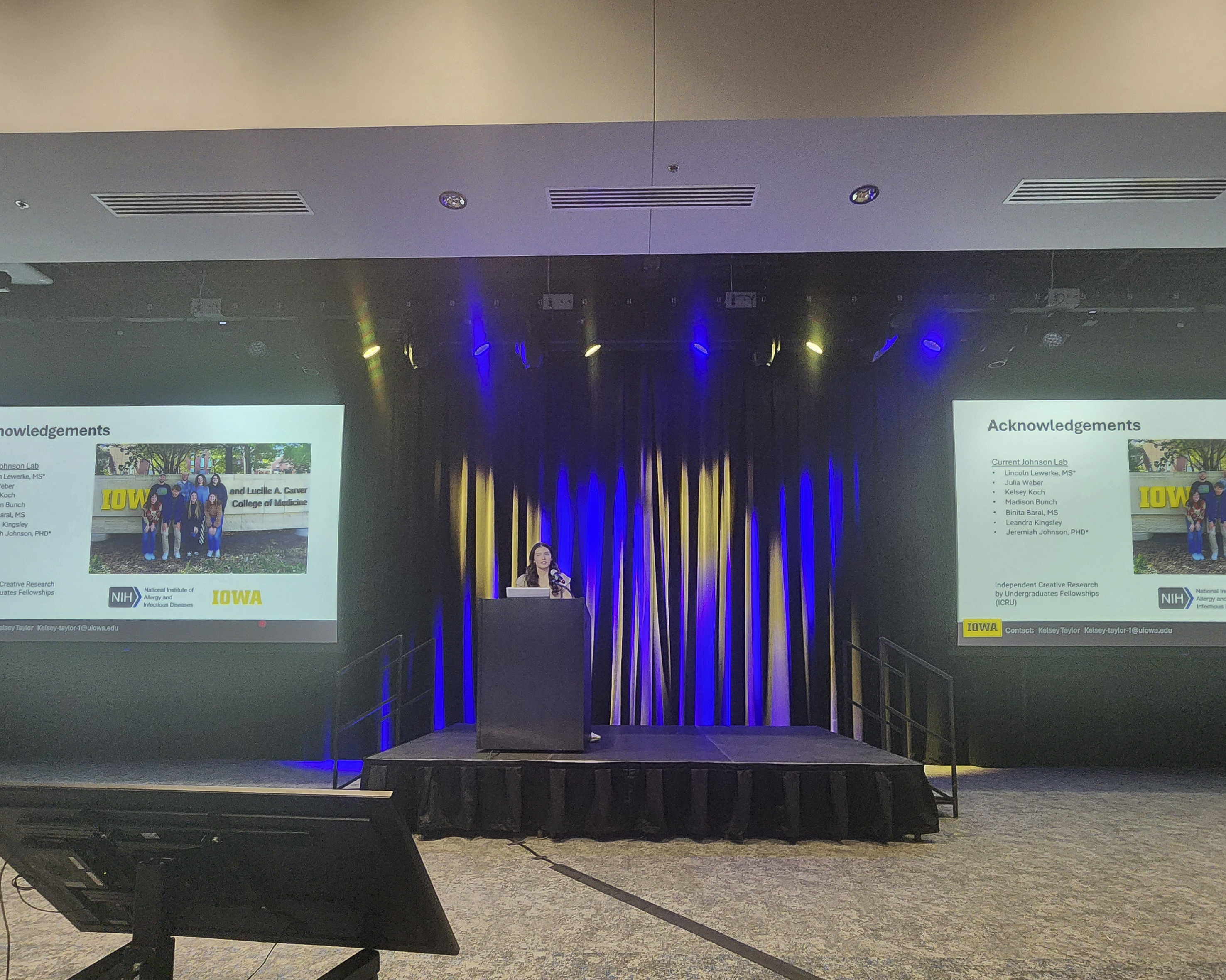
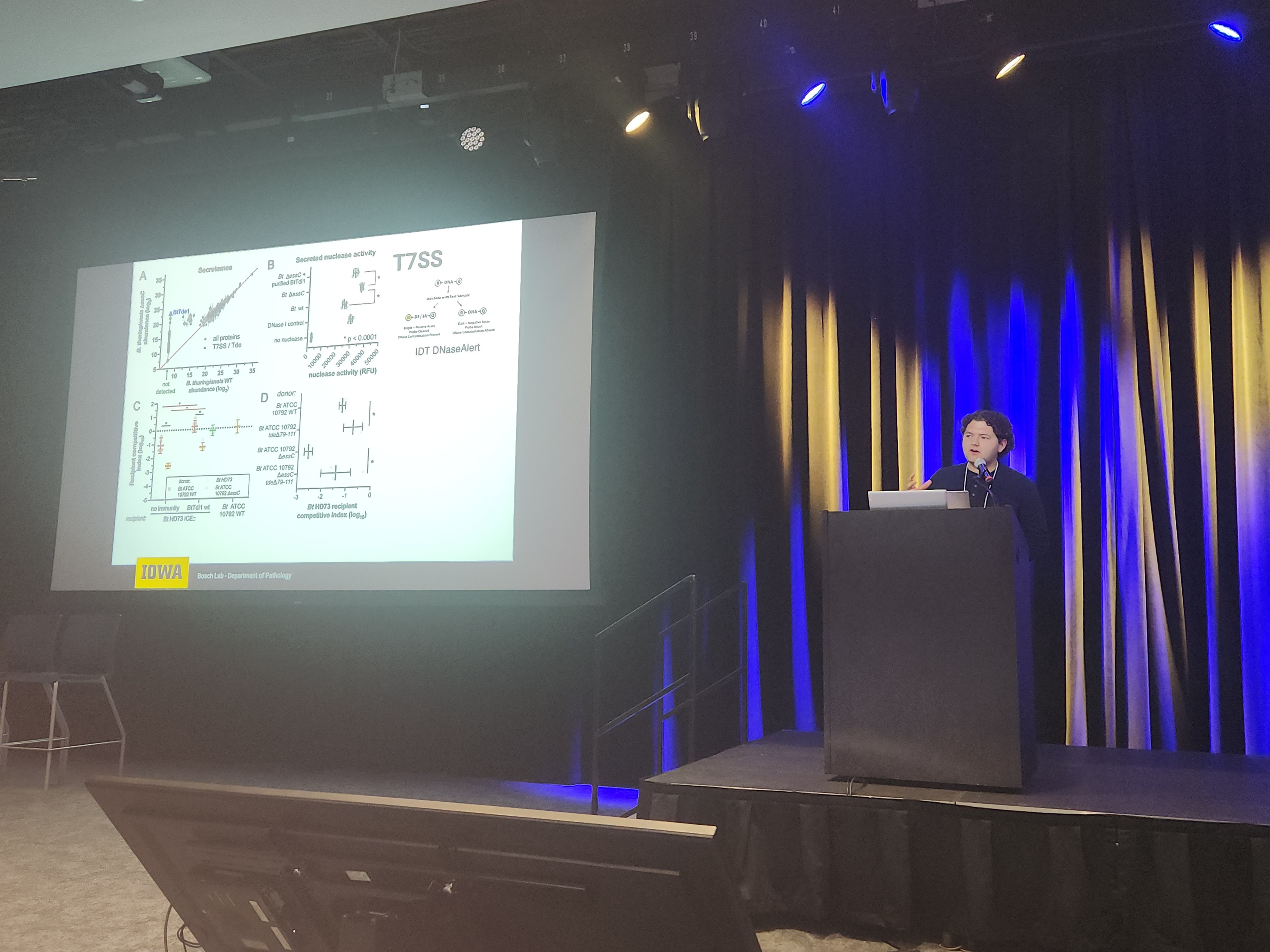
Additional undergraduate oral presenters included:
- Ethan Chodur (Bosch Lab), “Active Site Mimicry Underlies Toxic Effector Neutralization in Human Gut Bacillota.”
- Kelsey Taylor (Johnson Lab), “Constructing an Ordered Campylobacter jejuni Transposon Library.”
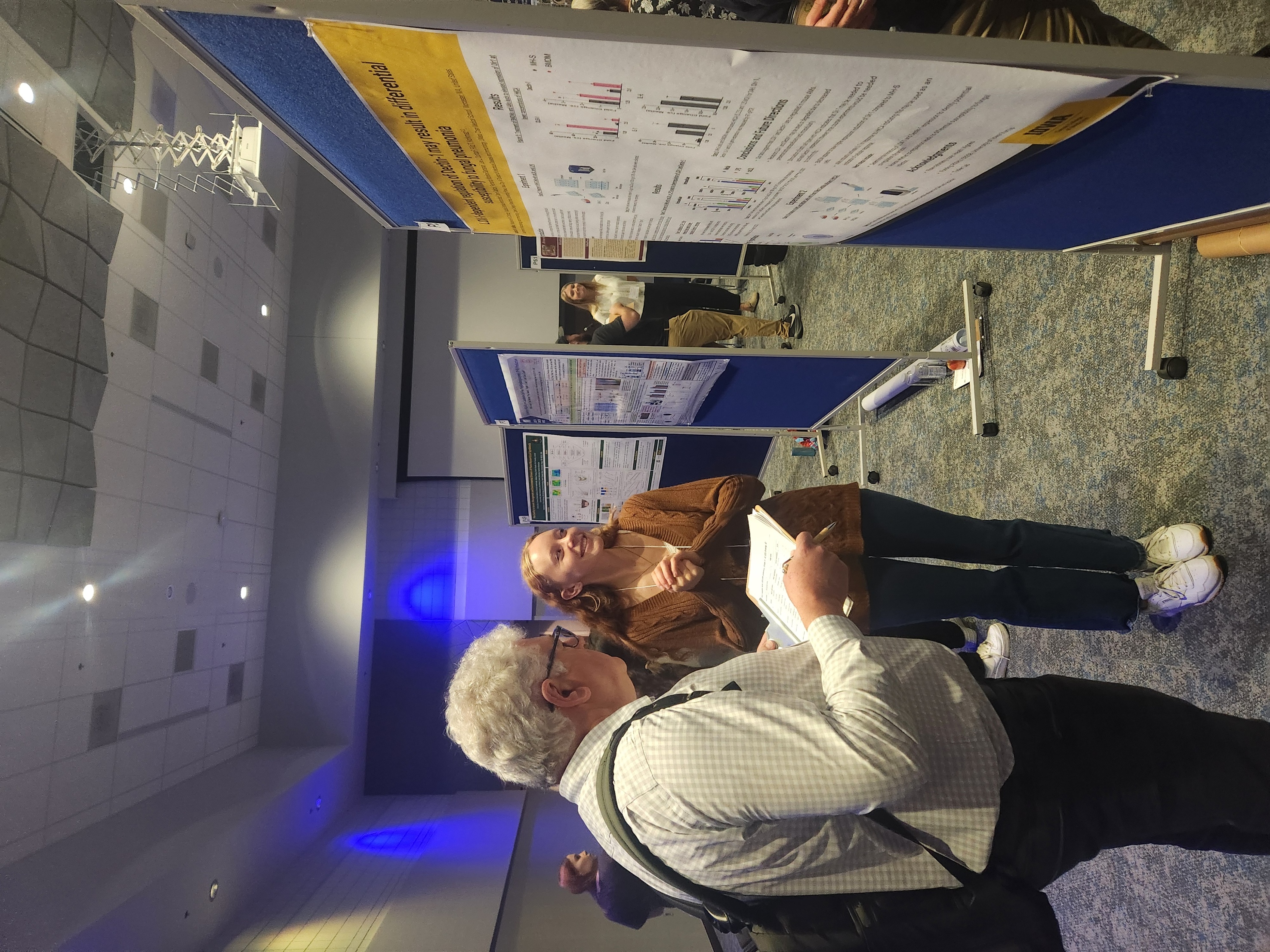
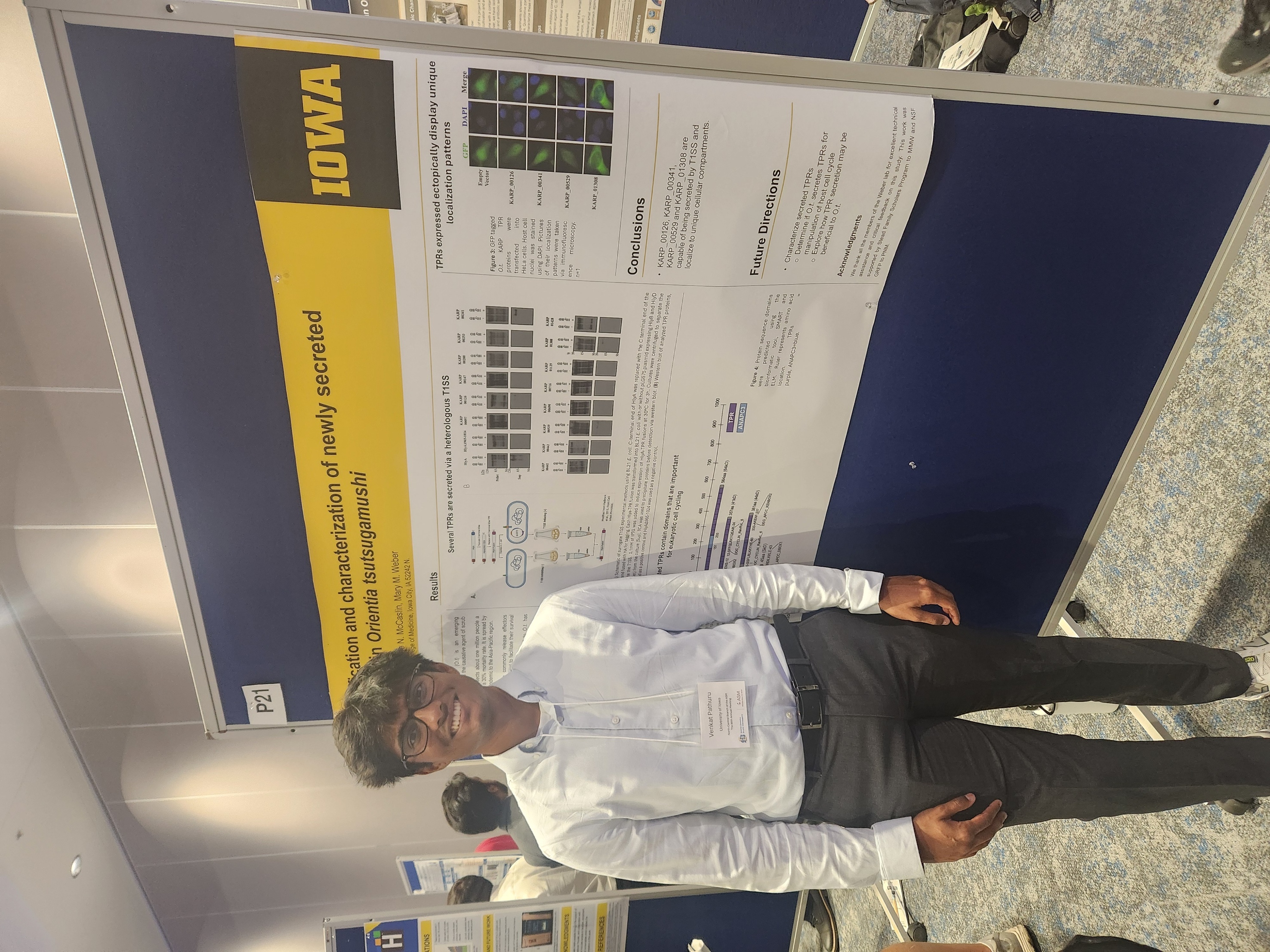
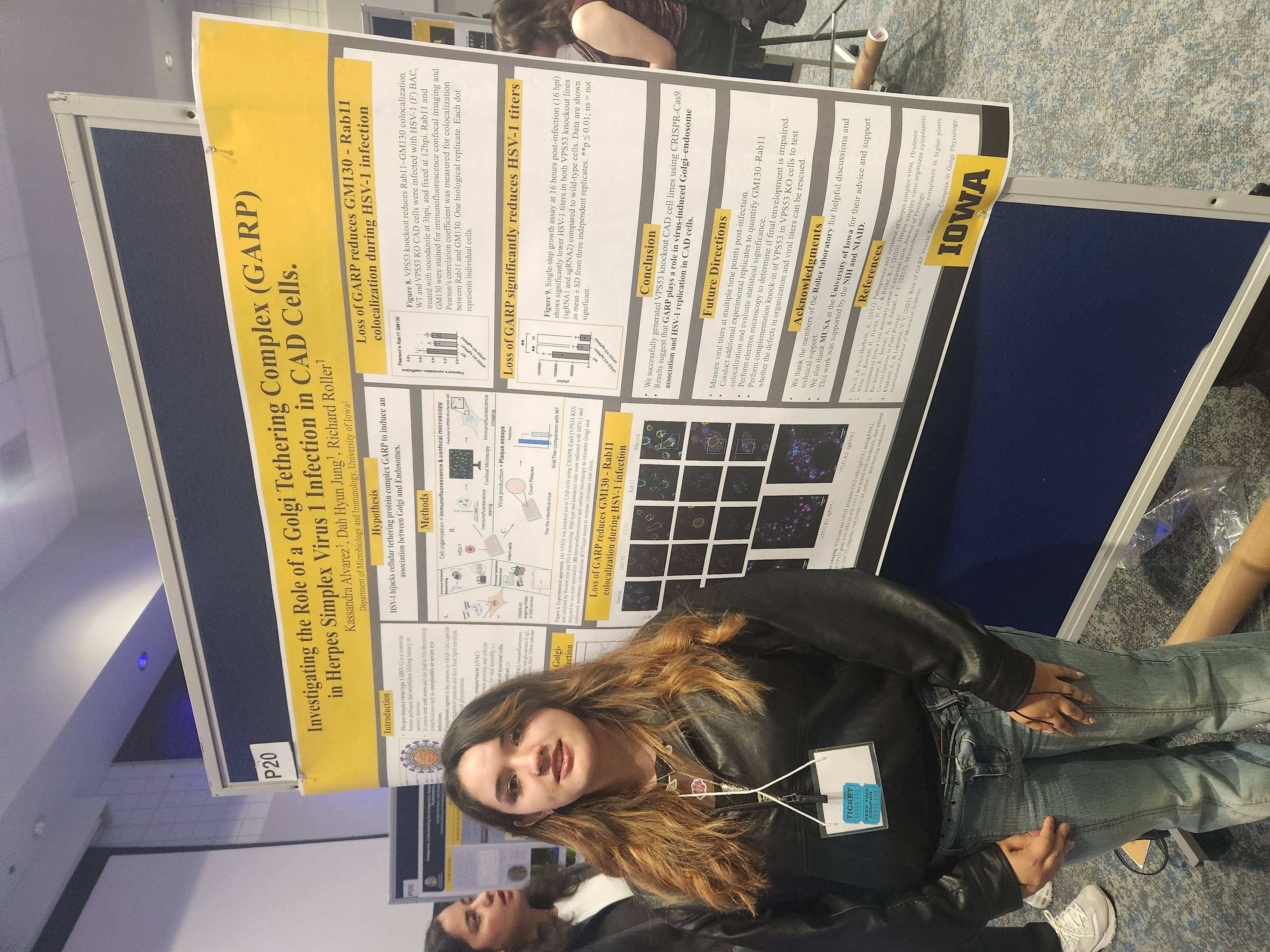
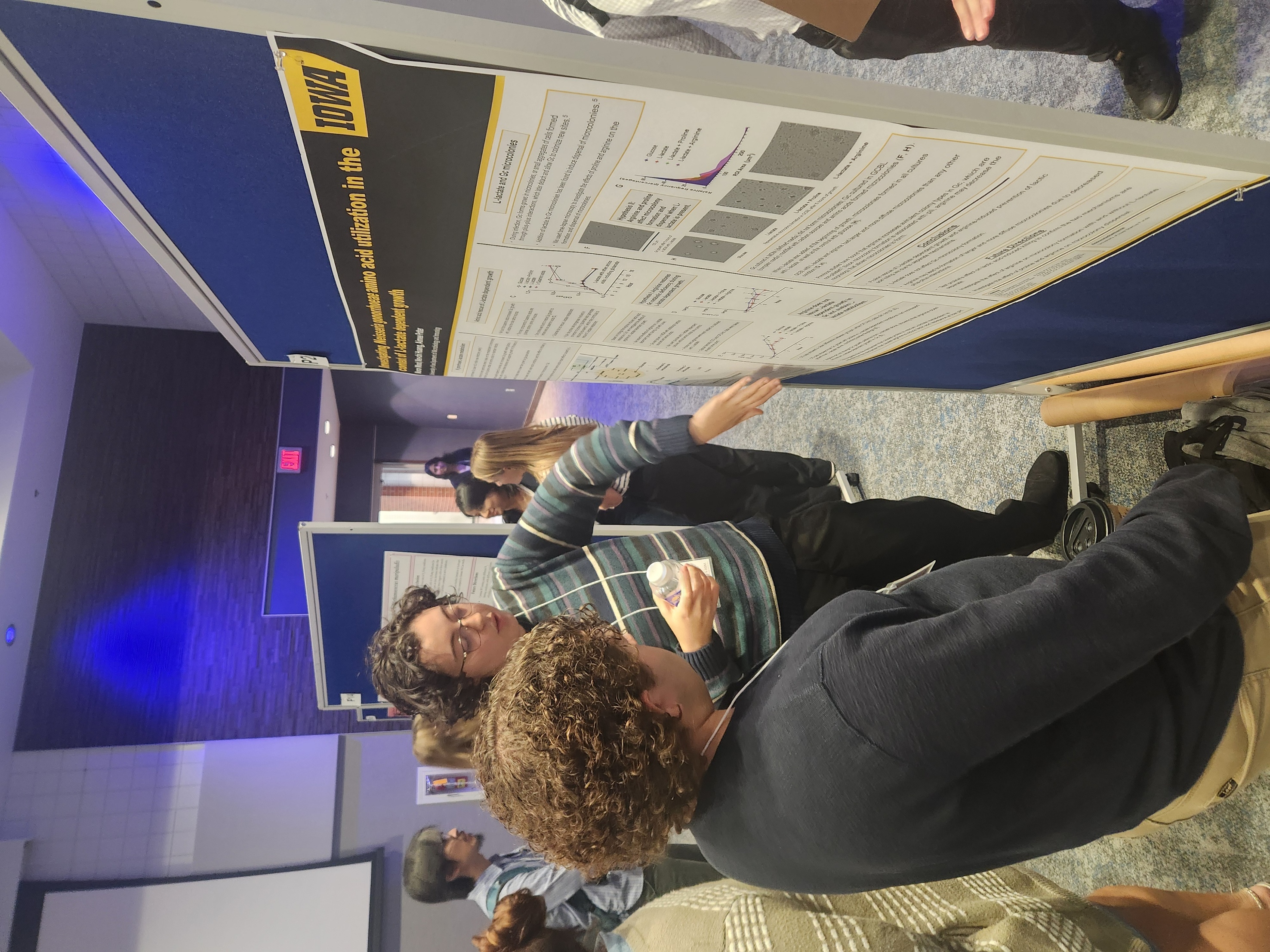
Six students presented research posters:
- Kassandra Alvarez (Roller Lab), “Investigating the Role of the Golgi Tethering Complex GARP in Herpes Simplex Virus Type 1 Infection in CAD Cells.”
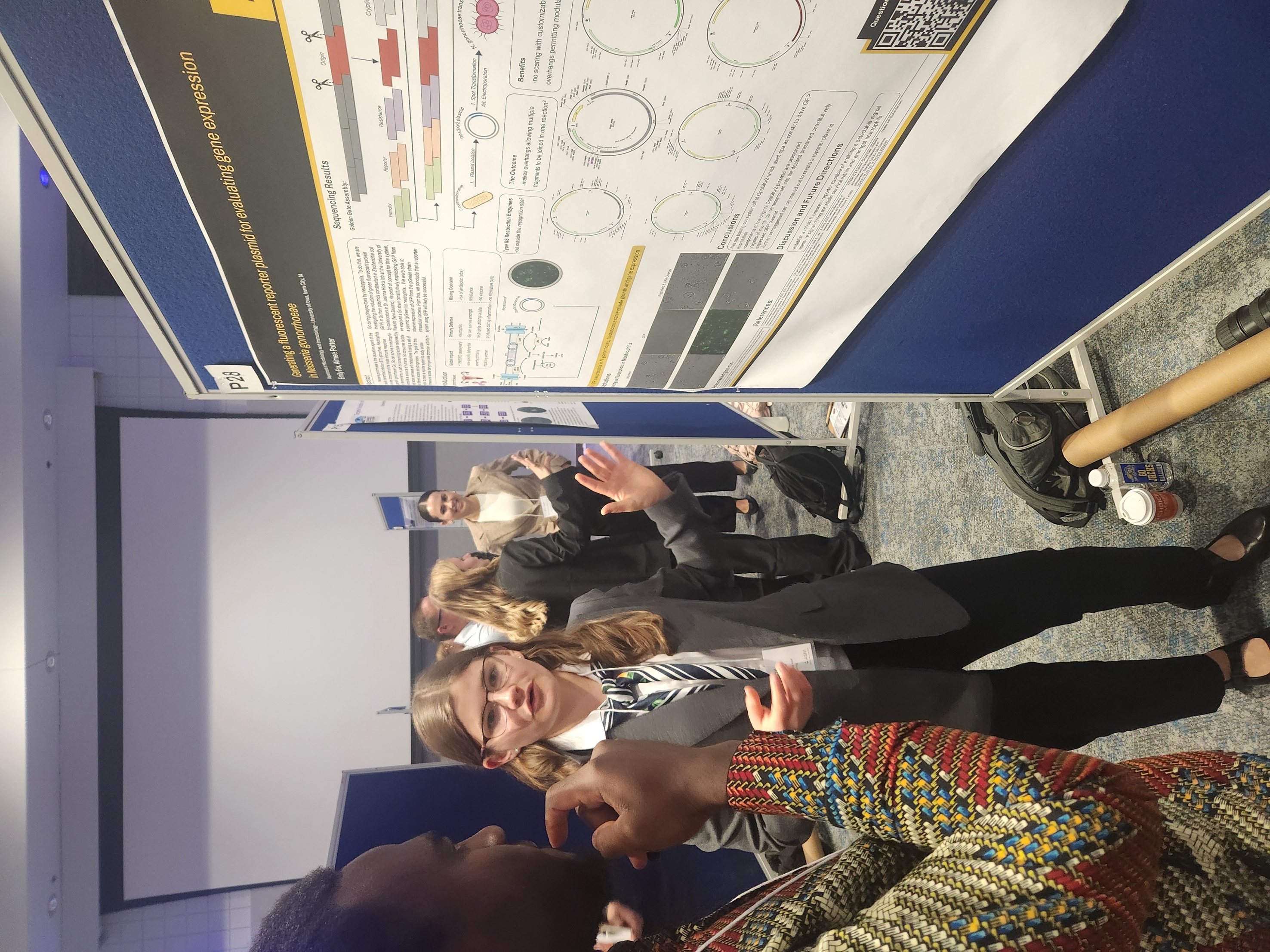
- Emily Fox (Potter Lab), “Generating a Fluorescent Reporter Plasmid for Evaluating Gene Expression in Neisseria gonorrhoeae.”
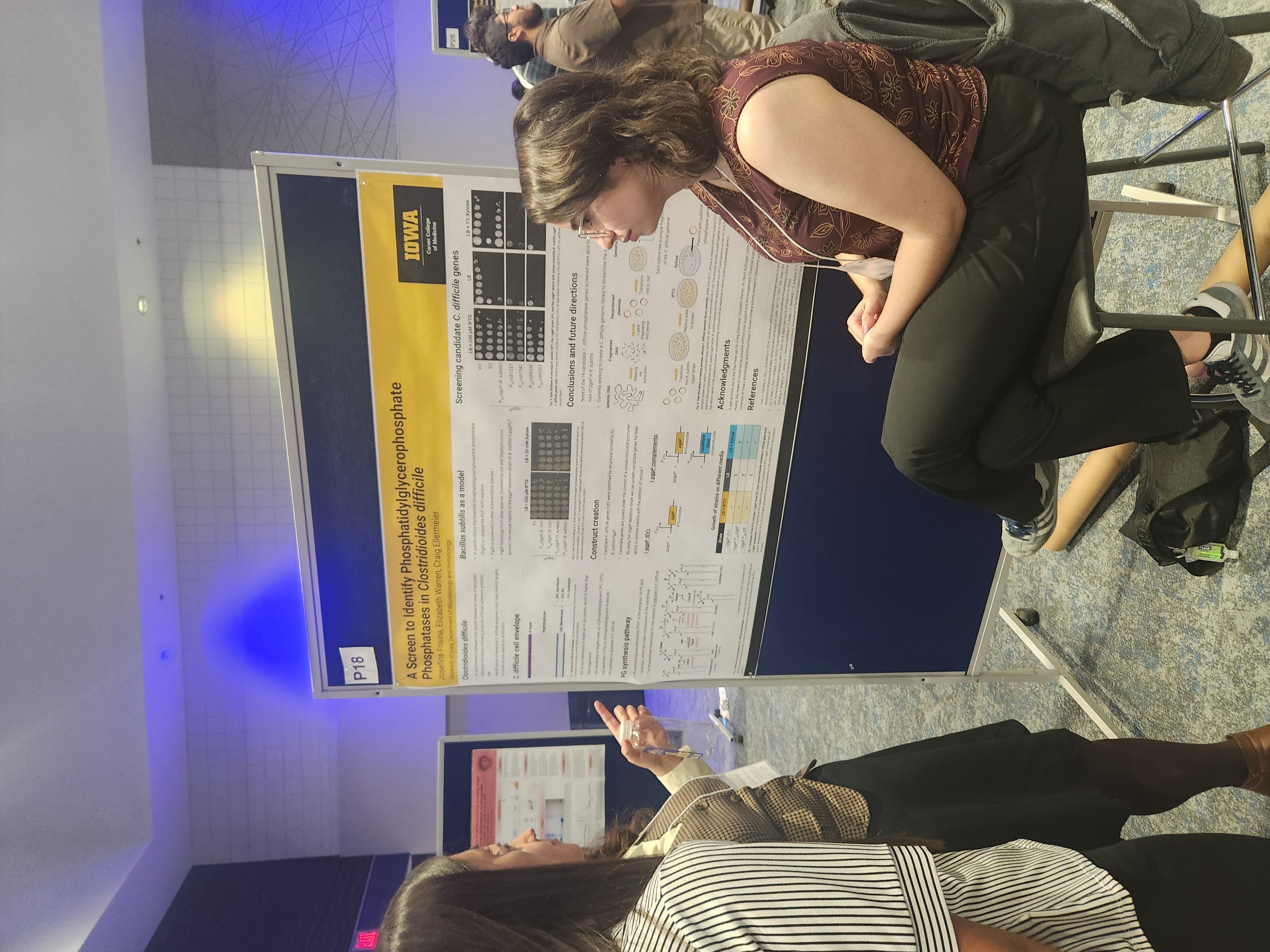
- Josefina Frisina (Ellermeier Lab), “A Screen to Identify Phosphatidylglycerophosphate Phosphatases in Clostridioides difficile.”
- Madison Kafka (Korkmaz Lab), “LOX-1-Dependent Regulation of Dectin-1 May Result in Differential Susceptibility to Fungal Pneumonia.”
- Venkat (Aashish) Pathuru (Weber Lab), “Identification and Characterization of Newly Secreted Effectors in Orientia tsutsugamushi.”
- Nora Wood (Potter Lab), “Investigating Neisseria gonorrhoeae Amino Acid Utilization in the Context of L-Lactate-Dependent Growth.”
The meeting provided valuable opportunities for students to share their research, gain presentation experience, expand their professional networks, and engage with the broader microbiology community.
Travel support was made possible through fundraising efforts by the Microbiology Undergraduate Student Association (MUSA), as well as contributions from Undergraduate Student Government (USG) and the Office of Undergraduate Research (OUR).